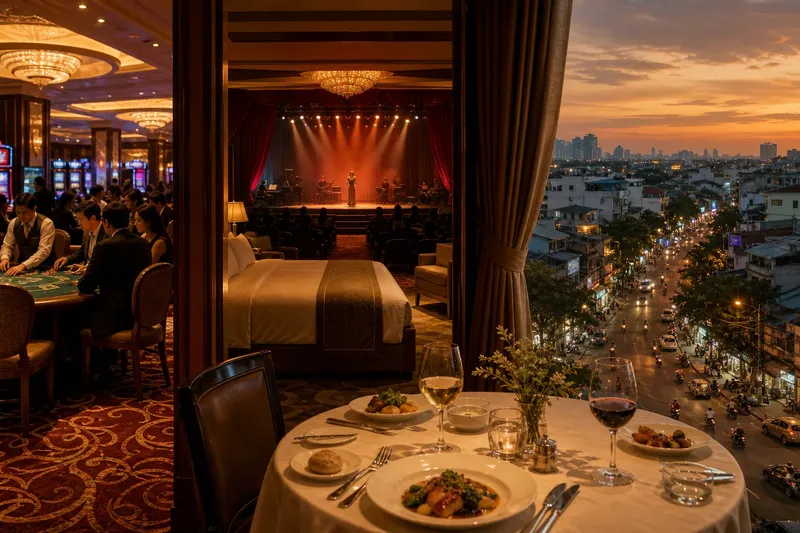
A Flexible Hóc Môn Evening, With Room to Change Course
Plan a flexible Hóc Môn evening around a shared meal, with clear ways to handle different schedules, comfort levels and optional entertainment.

The common mistake with a Hóc Môn evening is choosing a casino-style outing before asking what the group wants; the cost is a plan that can leave someone uncomfortable or waiting around. Start instead with one shared activity that feels complete on its own, and let any later entertainment remain a choice.
Hóc Môn belongs to the wider Ho Chi Minh City leisure picture, where work schedules, travel and different ideas of a good night shape what suits a group. Casino culture may influence what some people expect, but a theme is not a promise of particular activities or an atmosphere everyone will enjoy.
Choose a shared anchor
Pick an activity that gives the evening a purpose even if nobody wants to continue elsewhere: a meal, a café visit or another shared pastime. Agree on a meeting point people can find, and say whether the group plans to stay nearby or might split up later.
A clear anchor also makes room for late arrivals and early departures. Someone can join for dinner or leave after it without feeling that they have missed the whole occasion.
Compare the actual options
Rather than starting with a venue’s casino-style identity, compare what the group wants to do with the options people already know or are considering. A café may suit conversation; a restaurant may make the meal the whole event; another entertainment venue may work for a group seeking a particular activity. Ask what would make each person comfortable, then choose the option that best fits the shared part of the evening.
- Shared purpose: If everyone can name an activity they would enjoy together, keep that option; if not, choose a simpler meeting such as a meal or café visit.
- Schedule: If the proposed timing works for the person who must leave earliest, keep the plan; if it does not, move the shared activity earlier or end the outing there.
- Comfort: If people are at ease with the setting, retain it as an option; if someone is uneasy, choose a different shared place or split up after the anchor activity.
- Travel: If everyone has a workable way to arrive and get home, share the meeting details; if not, pick a more convenient meeting point or shorten the outing.
- Spending: If the expected costs are clear and suit the group, consider the option; if they are unclear or uncomfortable, choose an activity with simpler terms.
- Access needs: If the route and facilities suit those who need them, keep the option; if details are uncertain, ask the venue directly or choose a place the group can use comfortably.
- Conversation: If the setting allows the group to talk as hoped, keep it on the list; if the atmosphere feels too busy or loud, meet somewhere quieter.
Keep entertainment optional
Make the shared activity distinct from any later casino-style entertainment. Agree that nobody has to gamble, stay for another activity or explain a decision to leave. If wagering is available and someone chooses to participate, they can set a personal spending boundary beforehand and avoid using money needed for essentials.
Say you are arranging an invented after-work meet-up for three friends. One wants time to talk, one is curious about a casino-style venue, and one has to leave before any later activity begins. You choose a nearby meal as the shared anchor, send the meeting point in a Zalo message, and leave the later outing undecided. At dinner, the friend who must leave can do so as planned; the curious friend can decide whether to continue, while the person who wants conversation has still had a complete evening with the group.
Make room for different needs
For a larger gathering, ask one person to send the essentials in a group message on WhatsApp or Zalo: the meeting point, arrival window, agreed activity and expected finish. Keep the message brief, and offer a private way to flag access or timing needs.
If preferences do not overlap, a forced compromise can make the evening worse for everyone. Keep the shared part welcoming, then let people choose a smaller group, another activity or home without treating any choice as a failure.
Hóc Môn evening questions?
How do I choose a place for the group?
Begin with the shared activity and compare places that appear to suit it, rather than choosing by theme alone. If a venue’s current arrangements or suitability are unclear, contact it directly before making plans.
How can someone leave early?
Agree on a shared activity with a natural stopping point, such as a meal, and make the finish time clear in the group message. If others want to continue, they can do so separately.
What if some friends want casino-style entertainment?
Keep that interest separate from the group’s shared plan, so nobody feels obliged to take part. If the group does not agree on the setting, finish the shared activity together and let interested people make their own choice afterwards.
What if plans change after we meet?
Check the agreed timing, travel arrangements and comfort of the people still there. If the new option no longer suits someone, stay with the original activity, choose a simpler alternative or end the outing.
Keep the choice open
A flexible Hóc Môn evening is built around a shared activity, not a single entertainment format. The useful question is whether the plan suits the people who are actually meeting, including those who may leave early or prefer not to continue.
Before setting off, make sure everyone has the meeting point and knows that opting out is acceptable. That small agreement keeps a Hóc Môn evening easy to adapt without making anyone’s comfort the price of joining in.