The Casino Scene on Screen Is Not a Visitor Map
Casino scenes on screen create mood, not dependable visitor information. Learn how to read their design and separate cinematic clues from practical facts.
The most common mistake with casino scenes on screen is treating a polished floor plan as a preview of a real visit. That can leave you with the wrong expectations about the room, its mood or the evening you might actually have.
A film can make a casino feel grand, tense or welcoming without showing how a visitor would experience it. Its choices reveal how the production imagines casino culture, not how a particular venue works.
Story shapes the room
A screen casino is arranged around dramatic action. The director may want a character to cross a crowded floor, spot a rival and reach a private table without losing the audience. That route is composed for the shot, not offered as a dependable way through a real venue.
Camera position changes the apparent scale. A wide view can make a room seem grand and open; a closer frame can make it feel busy and intimate. Editing may also join separate locations into one continuous setting, even when filming took place elsewhere.
A memorable layout therefore tells you about the film’s visual design. It does not establish where an entrance is or how a real venue is organised.
Sets alter the setting
Casino interiors on screen may be filmed in a real venue, recreated on a sound stage or assembled from several locations. Lighting, set dressing, camera angles and digital effects can transform what appears in the finished scene.
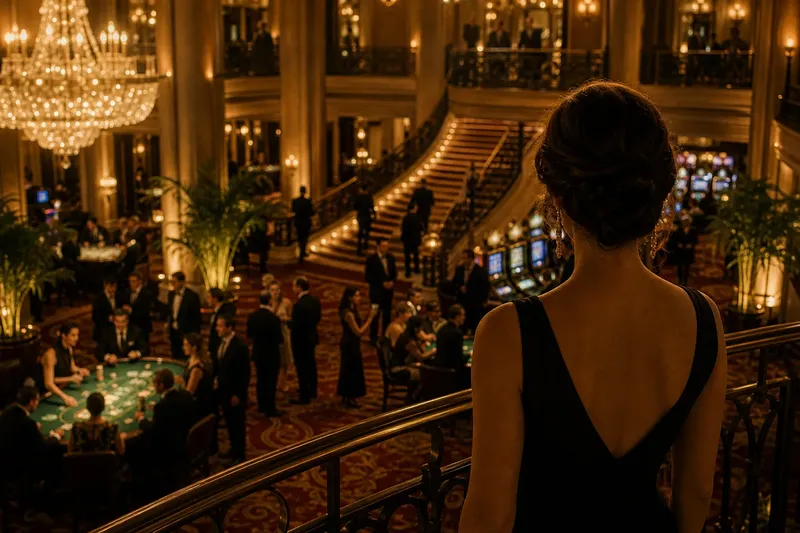
Notice the features serving the story: a striking staircase, a long sightline or a table positioned for conversation. These choices help viewers follow the action. They do not confirm that a visitor will find the same arrangement, or that the space shown is open to the public.
Even a recognisable building can be presented in a way that reveals little about its ordinary public spaces. Treat the image as part of the production’s design, rather than as a dependable record of the venue.
Editing creates mood
Music, colour, close-ups and the pace of editing guide the audience towards a feeling. A casino can seem glamorous, tense, lonely or exuberant because the production controls what you hear and see. The room is only one part of that effect.
A real visit includes competing sounds, pauses and choices that rarely help a film’s rhythm. The atmosphere may also change with the crowd, the time and the event. A dramatic scene can compress waiting into seconds or make an ordinary exchange feel charged by lingering on a face.
A film can still help you notice what kind of mood appeals to you. It just cannot predict whether a real place will feel the same.
Stories skip the practicalities
Screen stories make transitions disappear. A character arrives, crosses the venue and settles into a scene in moments. Finding an entrance, waiting for a companion or deciding where to spend time seldom matters to the plot.
Say you watch a fictional casino scene set amid formal interiors and live music, and you want an evening with a similar feel. You note those two preferences, then search for real venues that describe comparable surroundings or entertainment. If their descriptions match what you want, you have a useful shortlist; if they do not, the film remains an aesthetic reference rather than a plan.
This distinction applies to Hóc Môn and the wider city, too. A screen location can prompt curiosity about urban leisure, but it cannot tell you what is nearby or whether a venue exists as shown.
Characters bypass rules
Fictional characters may enter spaces, approach staff or use private areas because the story needs them to. Their behaviour is not a guide for guests. A scene can omit age checks, identification requirements, access restrictions and other ordinary conditions of entry.
The camera may follow someone through a room without explaining which areas are public, reserved or limited to particular guests. For a real outing, rely on current instructions from the venue and applicable local requirements, especially when age or access rules matter.
Reading casino scenes?
Was the scene filmed in a real casino?
Not necessarily. Productions may use a real venue, a constructed set, several locations or visual effects, and the finished scene alone cannot confirm where it was made.
Does the scene show which areas visitors can enter?
It shows what the story chooses to include, not a reliable account of public access. Treat private rooms and open spaces as parts of the scene unless the venue itself provides current visitor information.
Can a film predict a casino’s atmosphere?
It can communicate a crafted mood through sound, lighting and editing, but a real place may feel different at another time or during another event. Use the film to identify a style you like, not to predict the experience.
How can a scene help you choose an outing?
Turn its details into preferences, such as formal interiors or live entertainment, and use those to compare real leisure options. Keep the film’s setting separate from practical decisions about where to go.
Separate clues from facts
These checks can help you enjoy the scene without mistaking it for a visitor’s account:
- Notice the design language: If lighting, materials and costumes create a mood you enjoy, then use that mood as an aesthetic preference; if they do not, focus instead on the story or performances.
- Separate the named setting from the filming location: If dialogue names a casino, then treat it as the story’s location; if you need to know where filming happened, look for a production credit or another direct source.
- Watch for story shortcuts: If characters move instantly between rooms or enter private spaces without explanation, then treat those moments as narrative convenience; if practical access matters, consult the venue’s stated rules.
- Distinguish atmosphere from offering: If music and editing make the room feel lively, then record that as the film’s mood; if you want live entertainment at a real place, check its own current event information.
- Question apparent openness: If the camera shows a sweeping public-looking interior, then do not assume every area is visitor-accessible; if access matters, seek a direct description from the venue.
- Keep your plans flexible: If a real option shares the style you liked, then consider it on its own merits; if its current details do not suit you, choose another kind of outing rather than chasing the screen version.
A casino scene can be a vivid invitation to imagine an evening out, but its job is to make a story work. Read casino scenes on screen as crafted images: they can show you an aesthetic you enjoy, while leaving real-world decisions to evidence intended for visitors.
That distinction also makes the film more interesting. You can notice how a staircase, a held glance or a sudden cut shapes the fiction, then let the scene remain what it is: a carefully made piece of storytelling, not a promise about a night elsewhere.