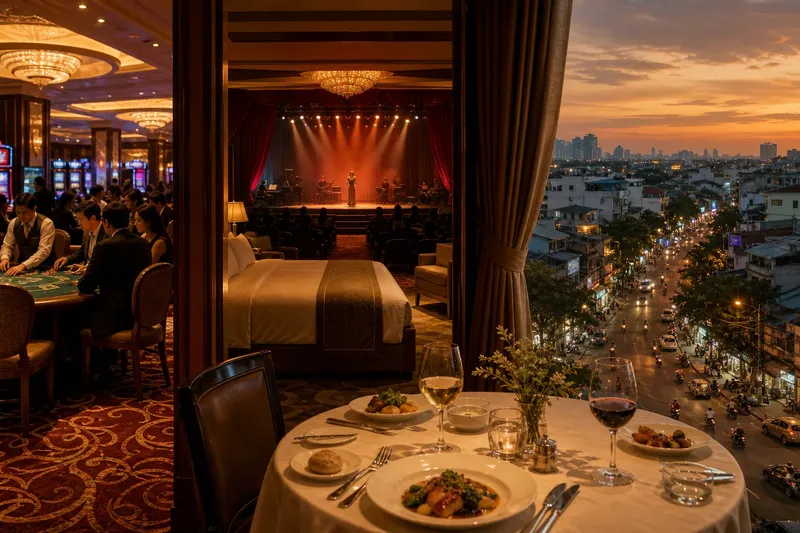
Casino, Resort, Venue: What the Label Leaves Open
Casino, resort and venue labels can hide important differences. Learn how to check what is open, who can enter and whether a place suits your plans.

The most common mistake with casino, resort and venue listings is assuming the label describes the whole visit. A search for casino, resort and venue options around Hóc Môn can return places with different activities, access rules and locations; choosing from a name alone may mean a wasted journey or an evening that does not fit your plans.
What Each Label Suggests
Casino points to a place associated with gambling. It might also have restaurants, bars, entertainment or accommodation, but the label does not tell you which facilities visitors can use or what rules apply.
Resort suggests a destination organised around accommodation and leisure. Its offer may be broad or limited, and some facilities could be reserved for overnight guests or require a separate booking.
Venue is broader still. It can mean a concert hall, event room, private club, restaurant or multipurpose space. The word says little about whether the public can walk in or whether an event is taking place.
These labels can overlap. A hotel might host performances; a resort might contain a casino; an event venue might sit inside a larger leisure complex. Treat the operator’s description as a starting point, then check the page for the specific activity you want.
Casino Listings Near Hóc Môn
Casino signals that gaming is part of a place’s identity, not that gaming is its only activity—or that every visitor can take part. A property may offer dining or entertainment as well, while entry to particular areas can depend on local rules and the operator’s conditions.
The word does not tell you which games are available, how entry works, or whether a non-gaming visitor can use other facilities. Look for current visitor information and check the rules for the activity you actually want.
In Hóc Môn, as elsewhere around a large city, a search result containing “casino” might be a business listing, a media reference, a themed attraction or a place outside the neighbourhood. Check the address and what the listing describes before treating it as a local leisure option.
What Resort Means
Resort suggests a stay with leisure facilities, but it does not tell you what a booking includes. One property might combine rooms and activities on one site; another might offer a narrower set of services. Meals, entertainment and access to facilities may be separate from the room reservation.
Say you are arranging an evening for relatives visiting Hóc Môn. You find a listing described as a resort and want dinner followed by time at a public facility, without staying overnight. You check the restaurant’s current hours, ask whether day visitors can enter, and read the property’s access information. If the restaurant welcomes day visitors but the leisure area is guest-only, the plan becomes clear: book dinner and choose a separate public stop afterwards. The label suggested a possibility; the details for each activity settled the trade-off.
What Venue Means
Venue describes a place used for an activity, but that activity may be the only reason it is open. A building used for private functions does not necessarily operate like a walk-in attraction.
For a public event, check the organiser’s event page, ticket details, entry conditions and full address. If the venue is inside a larger property, confirm which entrance to use. General information about the building may not cover the arrangements for a particular event.
Checks Before You Go
Start with the activity you want rather than the broad category. A restaurant menu, event page or accommodation booking page is usually more useful than a general description of the property.
- Address: If the street address and map pin point to the area you intend to visit, plan your journey from that location; if they differ or seem unclear, contact the operator before setting out.
- Operator: If the page belongs to the property or event organiser, use it for current details; if it is a directory or booking intermediary, confirm important information with the operator.
- Access: If the facility is open to visitors with your plans, continue to the booking check; if access is limited to guests, ticket-holders or another group, choose a public alternative or ask about eligibility.
- Hours and dates: If the stated hours or event date match your intended visit, plan around them; if information is missing or conflicts across pages, ask the operator to confirm before travelling.
- Included services: If the meal, show or facility is explicitly included in your booking, plan around it; if it is listed as an extra or its status is unclear, check the terms and decide whether to reserve it separately.
- Entry conditions: If the age, identification and reservation rules fit your party, follow them; if they do not, choose another activity or contact the operator about a suitable option.
- Journey and entrance: If the route and entrance information are clear, plan your arrival; if a large property has several buildings or entrances and the right one is uncertain, ask for directions before leaving.
A precise question can clear up an unclear listing: “Can visitors who are not staying overnight use the restaurant this evening?” If the answer is no, choose a separate restaurant rather than discovering the restriction on arrival.
Questions About Labels?
Does “casino” mean I have to gamble?
Not necessarily; a property may offer dining or entertainment as well. Check whether the specific facility you want is open to non-gaming visitors.
Does “resort” mean everything is included?
No; the label does not describe what comes with a room or which facilities need separate bookings. Check the terms for each service you plan to use.
Does “venue” mean I can walk in?
No; a venue may open only for a scheduled event or private booking. Check the event details or contact the organiser before travelling.
What if listings describe a place differently?
Compare the address, operator and page for the activity you want, then rely on the most relevant current information. If the difference affects entry or timing, ask the operator to clarify.
Using Labels Well
Use casino, resort and venue as search terms, then narrow the results by activity, access and location. This makes it easier to compare a performance space with a hotel facility or a gaming-related property without assuming they offer the same kind of visit.
For a plan around Hóc Môn, check whether the listing is actually nearby and suits the time you have. A place across the wider city may suit a particular event, but the journey and access arrangements matter as much as the category.
When searching for casino, resort and venue options, the most useful next question is not “What is this place called?” but “Can I do the activity I want there, on the date I have in mind?” That answer gives you a sound basis for choosing a destination or changing your plan.